
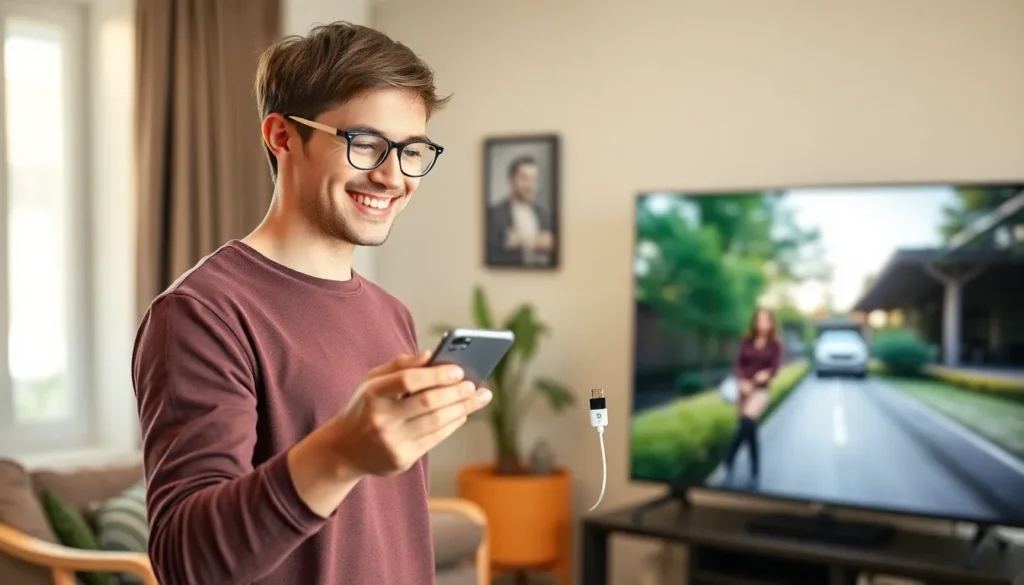
Imagine this: you’re ready to binge-watch your favorite show on a big screen, but Wi-Fi decides to play hide and seek, or maybe you don’t have an Apple TV. Frustrating, right? Don’t fret! Mirroring your iPhone to your TV without Wi-Fi or Apple TV is not only possible but also easier than finding a cat video on the internet.
Understanding Screen Mirroring
Screen mirroring enables users to display their device’s content on a larger screen. This process connects the iPhone directly to the TV without the need for Wi-Fi or Apple TV.
What Is Screen Mirroring?
Screen mirroring refers to the technology that replicates the display of one device onto another. iPhones utilize this feature to share everything from photos to videos on TVs. Supporting protocols, such as HDMI, help establish a direct connection. Many devices offer screen mirroring options compatible with various display technologies. Different methods exist to accomplish this, allowing flexibility for users.
Importance of Screen Mirroring for iPhone Users
Screen mirroring offers several advantages for iPhone users. It enhances the viewing experience by providing a larger display for multimedia content. Connecting to a TV allows for better engagement during presentations or game sessions. Family gatherings benefit from sharing memories on a bigger screen. This feature simplifies entertainment by eliminating the need for multiple devices, streamlining access to content. Instantly, users can switch between apps, images, and videos on the larger screen.
Methods to Mirror iPhone to TV Without WiFi or Apple TV

Multiple methods exist for mirroring an iPhone to a TV without Wi-Fi or an Apple TV. Each method serves different needs and ensures a seamless experience.
Using Lightning to HDMI Adapter
A Lightning to HDMI adapter connects an iPhone directly to a TV. Plug the adapter into the iPhone’s Lightning port, then connect an HDMI cable from the adapter to the TV. This wired connection transmits high-quality audio and video. Users experience minimal latency, making it ideal for gaming or watching videos. It’s essential to choose a compatible adapter to ensure the connection remains stable.
Using Third-Party Apps
Several third-party apps facilitate screen mirroring without relying on Wi-Fi or an Apple TV. Users can download apps like 5KPlayer or ApowerMirror directly from the App Store. These apps typically require a USB connection and can mirror content effectively. Proper setup ensures reliable performance. Before using, check for compatibility with the TV and iPhone model to guarantee functionality.
Using a Smart TV with Built-in Features
Many smart TVs come with built-in screen mirroring capabilities. Without needing an Apple TV, users can leverage these features. Options include using Miracast or DLNA to establish connections. Enabling the screen mirroring option on the TV allows the iPhone to connect directly. Follow the on-screen prompts to initiate the mirroring process. This method offers convenience, as users often access these features via the TV settings menu.
Troubleshooting Common Issues
Screen mirroring an iPhone to a TV can present challenges. Users may encounter connection problems or quality concerns, which it’s important to address for a smooth experience.
Connection Problems
Connection issues often arise during the mirroring process. Ensuring the Lightning to HDMI adapter is firmly connected to both the iPhone and the TV can prevent interruptions. Checking the HDMI port on the TV for functionality also helps resolve potential issues. Restarting the TV and iPhone can reset connections and often resolves minor glitches. If using third-party apps, ensuring that the USB connection is secure can improve reliability. Users should confirm that the TV supports the chosen screen mirroring standard, such as Miracast or DLNA, to enhance compatibility.
Quality Concerns
Quality issues affect the mirrored display experience. Distorted images or lagging videos result from poor connections or incorrect settings. Ensuring high-quality HDMI cables can significantly improve video output. Adjusting the TV input settings to match the iPhone’s resolution often enhances clarity. Users should close background applications on the iPhone to free up processing power and reduce lag. Frequent updates to the software for both the iPhone and third-party apps can ensure better performance, minimizing disruptions during viewing.
Mirroring an iPhone to a TV without Wi-Fi or an Apple TV opens up a world of entertainment possibilities. With straightforward methods like using a Lightning to HDMI adapter or leveraging third-party apps, users can enjoy their favorite content on a larger screen effortlessly.
These solutions not only enhance the viewing experience but also foster connection during family gatherings or presentations. By addressing common issues and ensuring proper connections, users can achieve a seamless mirroring experience.
Ultimately, the ability to share and enjoy multimedia content directly from an iPhone to a TV enriches everyday moments, making entertainment more accessible and enjoyable.


