
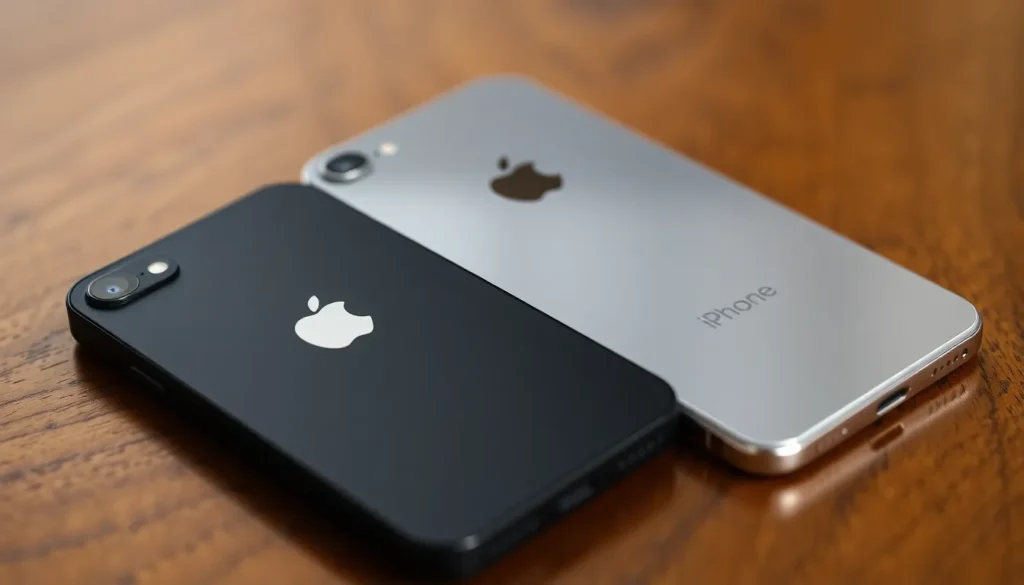
When it comes to smartphones, the battle of the models can feel like a game of musical chairs, and the iPhone SE and iPhone 8 are no exception. With Apple’s penchant for releasing devices that sometimes seem like distant cousins, it’s easy to get lost in the specs and features. So, is the iPhone SE really the sprightlier sibling, or is it just a clever marketing trick?
Picture this: the iPhone 8 struts in with its classic design and reliable performance, while the iPhone SE enters the scene, boasting a more modern chip and a price tag that makes wallets breathe a sigh of relief. But what does “newer” really mean in the world of tech? Let’s dive into the details and uncover whether the SE truly takes the crown or if the 8 still holds its ground.
Overview of iPhone SE and iPhone 8
Apple’s iPhone SE and iPhone 8 share features that attract users. Similar in size, both models boast a 4.7-inch Retina HD display, which delivers vibrant colors and sharp visuals. However, the design diverges as the iPhone 8 showcases a glass back, while the iPhone SE retains a more classic aluminum finish. Both phones are equipped with Touch ID, ensuring secure access.
Performance sets these devices apart. Equipped with the A13 Bionic chip, the iPhone SE offers advanced processing power compared to the iPhone 8’s A11 Bionic chip. This difference becomes apparent in multitasking and demanding applications, where the iPhone SE excels due to its newer technology. Battery life also shows distinctions; the iPhone SE provides around 13 hours of video playback while the iPhone 8 offers up to 14 hours, presenting a slight edge.
Camera capabilities are noteworthy. Both models feature a 12MP rear camera, but the iPhone SE benefits from software improvements that enhance photo quality, especially in low light. Selfie cameras remain identical, yet the iPhone SE supports features like Portrait mode due to its enhanced processing capabilities.
Price points create another factor for consumer choice. The iPhone SE typically boasts a lower price, appealing to budget-conscious shoppers. In contrast, the iPhone 8, while still considered affordable, generally retails at a higher price due to its established presence in the market.
User experience remains consistent across both models, yet the iPhone SE provides a fresh take on performance with its updated technology. Combining affordability with advanced features, the iPhone SE invites users seeking a modern device without breaking the bank.
Key Specifications Comparison

This section compares the iPhone SE and iPhone 8 across key specifications, providing insights into their design, performance, and functionality.
Design and Build Quality
The iPhone SE uses an aluminum body, maintaining a sleek and sturdy appearance. In contrast, the iPhone 8 features a glass back that enhances its premium look but may be more prone to damage. Both devices incorporate a 4.7-inch Retina HD display, delivering vibrant visuals. While the iPhone 8 offers a more elegant design, the SE’s choice of materials provides better durability. Weight-wise, the iPhone SE is slightly lighter, making it more comfortable for extended use. Color options vary, with the iPhone SE available in black, white, and red, while the iPhone 8 showcases silver, space gray, and gold. Ultimately, design preferences will influence user choice, but both models hit high marks for build quality.
Performance and Specs
In terms of performance, the iPhone SE packs the A13 Bionic chip, outperforming the iPhone 8’s A11 Bionic chip in speed and efficiency. This performance boost means the SE handles multitasking and demanding applications more smoothly. Memory capacity remains the same for both devices, offering choices between 64GB, 128GB, and 256GB. However, when it comes to battery life, the iPhone 8 surpasses the SE slightly with up to 14 hours of video playback compared to the SE’s 13 hours. Both smartphones support wireless charging and fast charging capabilities, enhancing user convenience. These performance specs indicate the iPhone SE holds a clear edge in processing power, while the iPhone 8 provides a slightly longer battery life.
Release Dates and Generational Context
Understanding the release dates helps clarify the generational context of both models. The iPhone 8 debuted first, launching on September 22, 2017. This device was introduced as part of Apple’s anniversary celebration, marking ten years since the original iPhone’s debut. Equipped with features appealing to users of that time, it solidified its place in the smartphone market.
The iPhone SE followed, arriving on April 24, 2020. Positioned as an affordable alternative, this model aimed to attract budget-conscious consumers without sacrificing performance. By incorporating advanced technology at a lower price, the iPhone SE catered to buyers looking for modern features in a more compact device. Its release aimed to provide a competitive option within the same market segment as the iPhone 8, enhancing consumer choice.
Features and Technology
Both the iPhone SE and iPhone 8 incorporate impressive technology, yet they offer distinct features that cater to different user preferences.
Camera Capabilities
Camera capabilities stand out between these two models. The iPhone SE features a 12MP rear camera enhanced by advanced software, improving photo quality in various conditions. Low-light situations reveal the iPhone SE’s strengths, showcasing its ability to capture clearer images. Portrait mode, available on the iPhone SE, adds a professional touch to photos, offering depth effects that the iPhone 8 lacks. While the iPhone 8 also houses a 12MP rear camera, its processing capabilities do not match those of the iPhone SE.
Software and Updates
Software and updates play a crucial role in the iPhone SE’s appeal. Running iOS 13 and receiving updates longer than the iPhone 8, the iPhone SE supports the latest features and security enhancements. Continuous support from Apple ensures users enjoy a modern experience. The iPhone 8, launched several years earlier, may gradually lose access to some newer software innovations. Thus, the iPhone SE places itself as a preferable choice for individuals prioritizing longevity in software support.
User Experience and Feedback
User reviews provide insight into experiences with the iPhone SE and iPhone 8. Both models receive positive feedback, yet user preferences often lean toward specific features.
Customer Reviews and Ratings
Customers frequently praise the iPhone SE for its powerful performance and affordability. Many users appreciate the A13 Bionic chip, noting how it handles multitasking seamlessly. Battery life also garners favorable comments, even if it falls slightly short of the iPhone 8. Users often mention the convenience of its lightweight design, enhancing overall comfort during extended use.
Ratings reflect these sentiments, with the iPhone SE typically scoring higher than the iPhone 8 on user review platforms. The camera’s low-light performance earns notable accolades, positioning the SE as a formidable choice for photography enthusiasts. In contrast, reviews for the iPhone 8 highlight its classic design and premium feel, appealing to those valuing aesthetic over specifications.
Choosing between the iPhone SE and iPhone 8 ultimately depends on individual preferences and priorities. The iPhone SE stands out with its powerful A13 Bionic chip and modern features at a more affordable price. Those looking for a device that excels in performance and longevity will likely favor the SE.
On the other hand, the iPhone 8 maintains its appeal with a classic design and slightly better battery life. It remains a solid choice for users who appreciate aesthetics and a premium feel. Both models offer reliable performance and quality, ensuring that either selection can meet the needs of different users. Ultimately, it’s about finding the right balance between features and budget.


